
No products in the cart.

Safe stroller use depends on correct setup, proper handling, and regular checks. When you take your child out for daily walks, even a small mistake can lead to falls or tipping. Roads are not always smooth, and sudden stops or slopes can increase risk. As a parent, your child’s safety always comes first, and a stroller should feel like a secure place, not a concern.
This guide explains stroller safety tips that help you avoid common risks. You will learn how to choose the right stroller, use safety features properly, and handle different walking conditions with confidence every day.
Why Stroller Safety Matters for Daily Walks
Stroller safety matters because unsafe use can lead to falls, tipping, and serious injuries. A loose harness, unlocked brakes, or extra weight on the handle can make a stroller unstable within seconds. These risks are common and often happen during simple daily routines.
You may walk on uneven roads, cross busy streets, or stop suddenly when traffic changes. A small bump, a slope, or a quick turn can cause the stroller to tilt or roll away. Even a moment of inattention can put your child at risk.
Prevention is the key to safe walks. When you follow basic stroller safety tips, you reduce risks and keep your child secure every time you step outside.
Choose the Right Stroller for Your Child
Choosing the right stroller keeps your child safe because it supports their size, age, and daily needs. A well-matched stroller reduces the risk of tipping, poor support, and discomfort during walks.
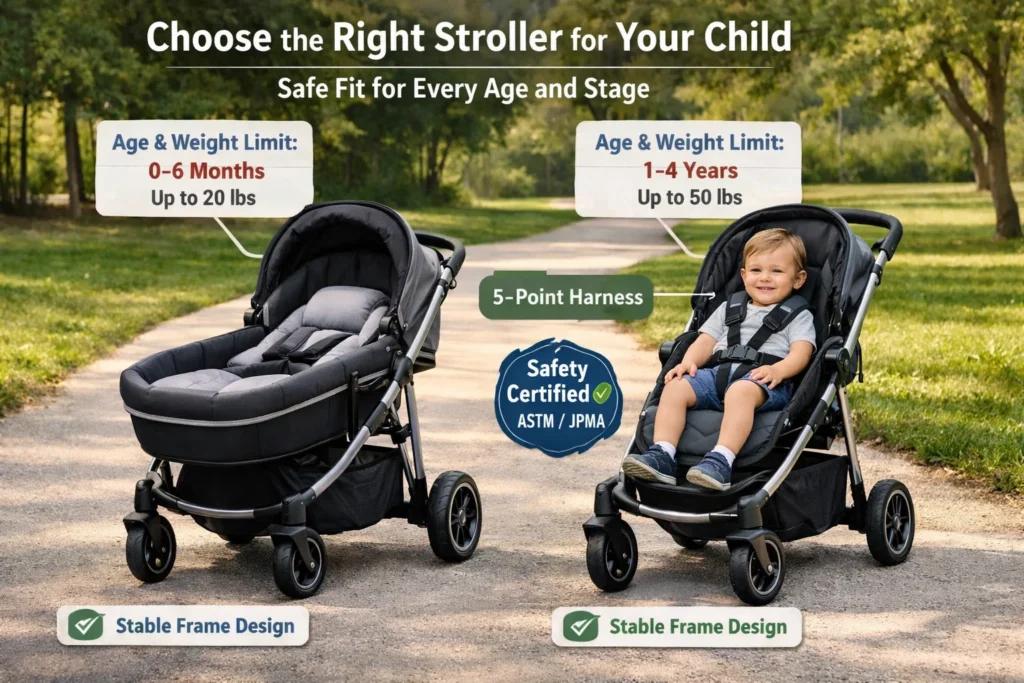
Check Age and Weight Limits
Check age and weight limits because they protect your child from poor support and imbalance. Each stroller is designed for a specific stage, such as newborn or toddler use. For example, infant strollers offer full recline and head support, while toddler strollers support sitting and higher weight. Using the wrong type can lead to unsafe positioning.
Look for Safety Certifications
Look for safety certifications like ASTM and JPMA because they confirm the stroller meets tested safety standards. These certifications show that the stroller has passed checks for stability, brakes, and harness strength. Certified strollers are safer because they follow strict guidelines set by trusted safety organizations.
Ensure a Stable and Strong Frame
Ensure a stable and strong frame because it prevents tipping during daily use. A wide base keeps the stroller balanced, even on uneven surfaces. Durable materials like reinforced aluminum or steel frames add strength and long-term safety. A solid frame gives better control and protects your child on every walk.
Always Use the Safety Harness Properly
Using the safety harness properly keeps your child secure because it holds them in place at all times. A harness prevents slipping, standing, or falling out of the stroller during movement or sudden stops.
Understand the 5-Point Harness System
Understand the 5-point harness system because it is the safest way to secure your child. It has five straps that go over both shoulders, around the waist, and between the legs. These straps connect at a central buckle to keep your child firmly seated. This design spreads pressure evenly and reduces the risk of injury during sudden movement.
Adjust Straps for a Snug Fit
Adjust straps for a snug fit because loose straps can allow your child to slip out. The harness should be tight enough to hold your child in place but not so tight that it causes discomfort. You should be able to fit two fingers between the strap and your child’s body. Proper adjustment prevents slipping or falling during daily walks.
Lock the Brakes Whenever You Stop
Lock the brakes whenever you stop because it prevents the stroller from rolling away. A moving stroller can quickly become dangerous, especially on slopes or near roads.
When to Use Brakes
Use brakes every time you park or stop, including when loading or unloading your child. Even a slight incline can cause the stroller to move without warning. Locking the brakes keeps the stroller stable and gives you full control during short stops.
Test Brakes Regularly
Test brakes regularly because worn or loose brakes may fail when needed. Before every walk, press the brakes and gently push the stroller to check if it stays in place. This simple check ensures the brakes work properly and keeps your child safe during daily use.
Avoid Overloading the Stroller
Avoid overloading the stroller because extra weight can make it unstable and increase the risk of tipping. A balanced stroller keeps your child safe and easier to control during walks.
| Safety Tip | Explanation |
| Stick to Weight Limits | Follow the stroller’s weight limits for both the seat and storage basket. Manufacturers set these limits to keep the stroller stable. Adding too much weight, especially in the basket or on the handle, can affect balance and control. |
| How Overloading Causes Tipping | Overloading causes tipping because extra weight shifts the center of gravity. For example, hanging heavy bags on the handles can pull the stroller backward. This can lead to sudden tipping, especially when your child is inside. |
Be Careful on Different Terrains
Be careful on different terrains because uneven ground and slopes can affect stroller control. Changing surfaces require more attention to keep your child safe during daily walks.
Walking on Rough or Uneven Surfaces
Slow down and stay alert when walking on rough or uneven surfaces because bumps can shake the stroller or cause it to tilt. Paths with cracks, gravel, or potholes can make the wheels unstable. Moving at a steady pace helps you maintain balance and control.
Navigating Slopes and Curbs
Always hold the stroller firmly and use brakes when navigating slopes and curbs because these areas increase the risk of rolling or tipping. When going downhill, keep a strong grip and move slowly. When stopping on a slope or lifting over a curb, use the brakes to keep the stroller steady.
Keep Your Child Comfortable and Protected
Keeping your child comfortable and protected helps prevent health risks like overheating, cold exposure, or discomfort during daily walks.
Use Sun Canopy and Weather Covers
- Use a sun canopy to protect your child from direct heat and sunlight
- Add a rain cover to keep your child dry during sudden weather changes
- Use wind covers in cold or breezy conditions to block strong air
- Check airflow to ensure your child can breathe comfortably inside
Dress Your Baby for the Weather
- Dress your baby in light clothes during hot weather to avoid overheating
- Use warm layers like jackets, socks, and caps in cold conditions
- Avoid overdressing, as it can cause sweating and discomfort
- Check your baby’s temperature regularly to ensure they feel comfortable
Regularly Inspect and Maintain Your Stroller
Regularly inspect and maintain your stroller because small issues can turn into safety risks over time. Routine checks help keep the stroller safe, stable, and ready for daily use.
Check Wheels, Brakes, and Frame
Check wheels, brakes, and the frame because these parts affect control and safety. Look for signs of wear and tear such as loose wheels, weak brakes, or cracks in the frame. Fixing these issues early prevents accidents during walks.
Clean and Store Properly
Clean and store the stroller properly because dirt and poor storage can damage parts. Wipe down the frame, wheels, and fabric to remove dust and debris. Store the stroller in a dry and safe place to extend its life and keep it safe for your child.
Stay Alert During Walks
Stay alert during walks because your attention keeps your child safe in changing surroundings. A focused approach helps you respond quickly to traffic, obstacles, and sudden situations.
Avoid Distractions
Avoid distractions because using your phone while pushing a stroller can reduce your control. Looking at the screen for even a few seconds can lead to missed obstacles or unsafe turns. Keep both hands on the stroller and your eyes on the path.
Watch Traffic and Surroundings
Watch traffic and surroundings because roads and crossings can change quickly. Use crosswalks, wait for clear signals, and check both directions before moving. Staying aware of people, vehicles, and road conditions helps you make safe decisions during every walk.
Conclusion
Safe daily walks with your child depend on simple habits like proper stroller setup, correct use of safety features, and staying alert at all times. Each step, from using the harness to checking brakes and avoiding overload, plays a key role in keeping your child secure. Small actions can prevent serious risks and give you peace of mind. When you follow these stroller safety tips, you create a safe and comfortable space for your child on every walk. Make safety part of your routine, and every outing will feel more controlled, calm, and enjoyable for both you and your child.
Frequently Asked Questions
What is the safest way to use a stroller daily?
The safest way to use a stroller is to secure your child with a harness, lock the brakes when stopped, and check the stroller before each walk. These steps reduce the risk of falls, tipping, and movement on slopes.
When can I start using a stroller for my baby?
You can start using a stroller from birth if it supports full recline and proper head support. For example, infant strollers are designed for newborns, while standard strollers are better for older babies who can sit up.
How tight should the stroller harness be?
The stroller harness should be snug but comfortable. You should be able to fit two fingers between the strap and your child’s body. This fit prevents slipping without causing discomfort.
Is it safe to hang bags on a stroller handle?
No, hanging heavy bags on the stroller handle is not safe because it can cause tipping. Always place items in the storage basket within the weight limit to keep the stroller balanced.
How often should I check my stroller for safety?
You should check your stroller before every walk. Look at the wheels, brakes, and frame for any damage or looseness. Regular checks help prevent accidents and keep your stroller in good condition.
Can I use a stroller on rough or uneven roads?
Yes, but you should move slowly and stay alert. Uneven roads can affect balance, so keep a firm grip and avoid sudden movements to maintain control.
Why is locking stroller brakes important?
Locking stroller brakes is important because it prevents the stroller from rolling away. Always use brakes when stopping, parking, or placing your child inside or outside the stroller.
