
No products in the cart.

Choosing the right stroller for your baby depends on your baby’s age, your daily routine, and key safety features. It is like picking the right pair of shoes. If they don’t fit your lifestyle, every step feels harder. A stroller is something you will use almost every day, from quick store visits to long walks, so the right choice saves time and effort. The wrong one can feel like dragging a heavy bag uphill. In this guide, you will learn how to pick a stroller that fits your needs, keeps your baby safe, and makes your day smoother.
How to Pick the Right Stroller for Your Baby
To choose the right stroller for your baby, focus on safety, comfort, and how you plan to use it every day. A stroller should fit your routine, not slow you down. When these three factors match your needs, daily outings feel simple and stress-free.
Check Your Baby’s Age and Weight
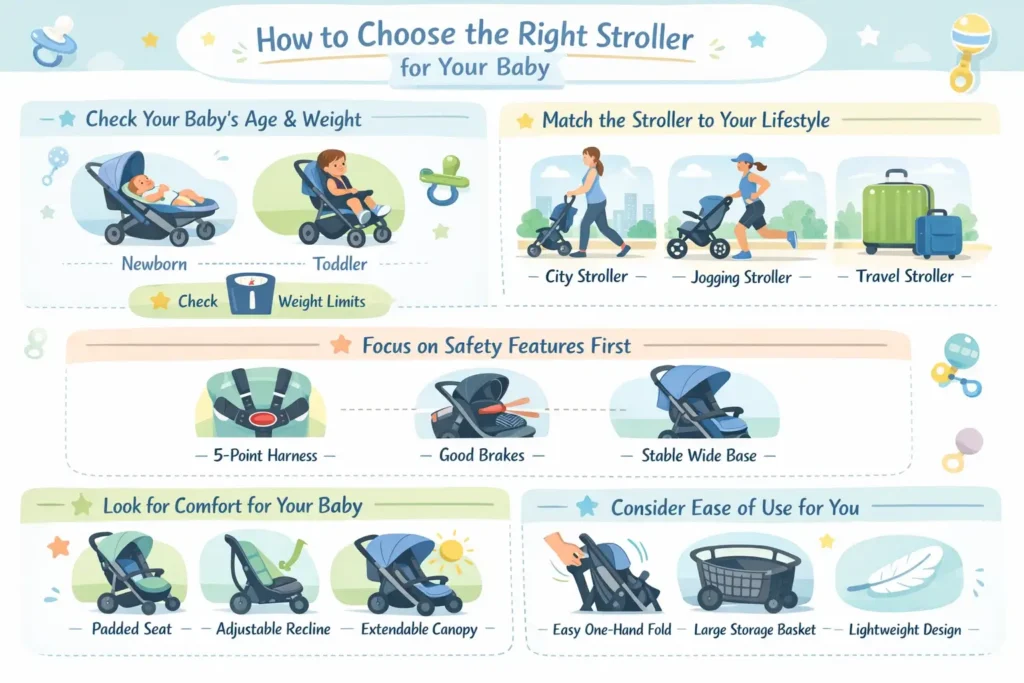
Choose a stroller based on your baby’s age and weight. Newborns need a stroller with a full recline so they can lie flat and support their neck properly. Toddlers, on the other hand, can sit upright and need less support. A lightweight stroller works well for older babies because it is easy to carry and move. Always check the weight limit to make sure the stroller lasts as your baby grows.
Match the Stroller to Your Lifestyle
Pick a stroller that fits how you live your day. If you walk in busy areas or go shopping often, a compact stroller makes moving through tight spaces easier. For travel, a foldable and light stroller saves effort. If you enjoy running or long outdoor walks, a jogging stroller handles rough paths better. It is like choosing shoes for different occasions. You would not wear running shoes to a formal event, and the same idea applies here.
Focus on Safety Features First
Look for strong safety features before anything else. A 5-point harness keeps your baby secure, while good brakes stop the stroller quickly when needed. A wide base adds stability and prevents tipping. Safety should never be skipped because it protects your baby in every situation. Many strollers meet basic safety standards, so check for certified products that follow trusted guidelines.
Look for Comfort for Your Baby
Choose a stroller that keeps your baby comfortable during every ride. A padded seat and adjustable recline help your baby sit or rest with ease. A large sun canopy protects from heat and light. A smooth ride matters because babies often nap during walks. On longer outings, a comfortable stroller keeps your baby calm and relaxed.
Consider Ease of Use for You
Pick a stroller that is simple for you to handle. A quick folding system saves time, especially when you are in a hurry. A one-hand fold is helpful when you are holding your baby. Check the weight so you can lift it without struggle, and make sure there is enough storage for bags. In real life, you may need to carry your baby in one arm and fold the stroller with the other, so ease of use makes a big difference.
Types of Baby Strollers You Can Choose From
There are several types of baby strollers, and each one fits a different need. Choosing the right type depends on how often you go out, where you use it, and your baby’s age. When you match the stroller type with your routine, daily use becomes much easier.
Full-Size Strollers
Full-size strollers are best for everyday use. They come with strong frames and offer many features like storage space, reclining seats, and large canopies. These strollers handle daily walks and longer outings with ease. They are a good choice if you want one stroller that covers most needs.
Lightweight or Umbrella Strollers
Lightweight strollers are easy to carry and simple to fold. They work well for travel, quick trips, or short outings like grocery runs. These strollers take up less space and are easy to store. They are ideal for older babies who can sit without full support.
Jogging Strollers
Jogging strollers are made for running and rough paths. They have strong wheels and good suspension to handle uneven surfaces. These strollers move smoothly even on parks or trails. They are a solid choice if you stay active and spend time outdoors.
Travel System Strollers
Travel system strollers include an infant car seat that fits directly onto the stroller frame. This setup is useful for newborns because you can move your baby from car to stroller without waking them. It saves time and effort during daily travel. Many parents find this option helpful in the early months.
Double Strollers
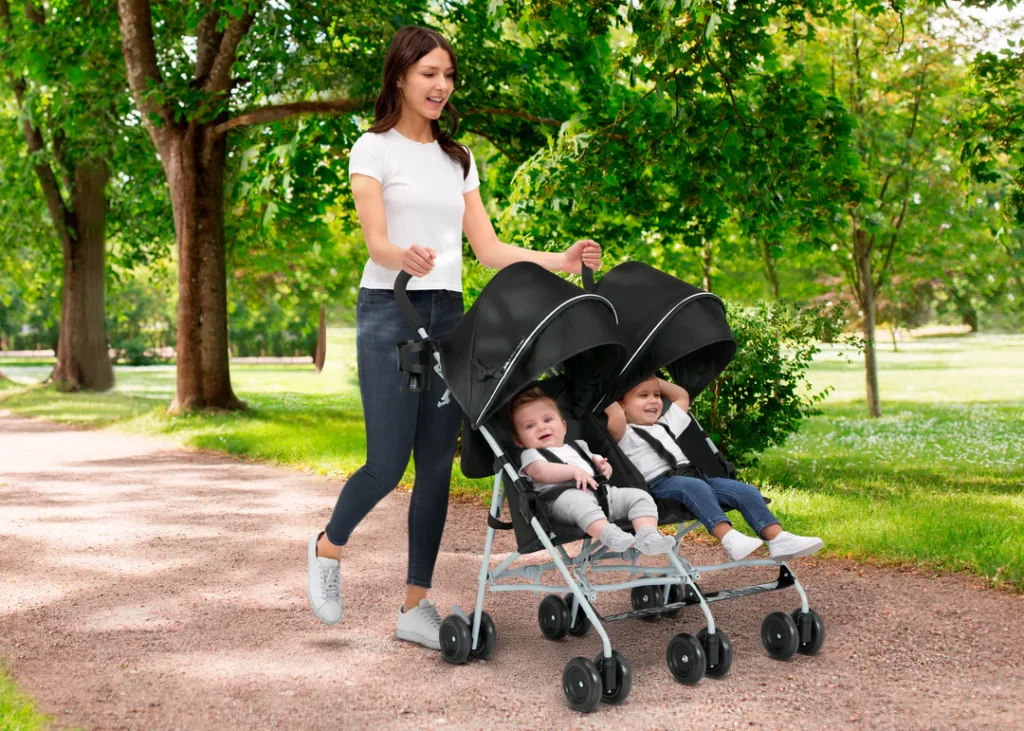
Double strollers are designed for two children. They come in side-by-side or tandem styles, depending on your preference. These strollers help manage twins or siblings close in age. They make it easier to move both children at the same time without extra effort.
Key Features You Should Never Ignore
The key stroller features you choose will affect your daily use more than anything else. Focus on parts that improve safety, comfort, and ease. When these features work well, your stroller feels like help, not extra work.
Wheel Type and Suspension
Choose wheels based on where you plan to use the stroller. For smooth roads and malls, smaller foam wheels work fine and need less care. For rough roads or parks, air-filled wheels with good suspension give a smoother ride. A stable ride keeps your baby calm, especially during longer walks. It also reduces shaking, which helps during nap time.
Storage Space
Pick a stroller with enough storage for daily needs. A large basket helps you carry diaper bags, bottles, and even small grocery items. Without enough space, you may end up carrying extra bags on your shoulders. This can quickly feel tiring during longer outings. Good storage keeps everything in one place and easy to reach.
Foldability and Portability
Look for a stroller that folds easily and fits into your car. A compact fold saves space and makes travel simple. This is helpful when you move between places often. Easy storage at home also matters, especially in smaller spaces. A stroller that folds quickly saves time and effort every day.
Canopy and Weather Protection
Choose a stroller with a strong canopy for sun and rain protection. A wide canopy shields your baby from heat and direct light. Good ventilation keeps airflow steady and prevents discomfort. This matters most during warm days or long outdoor use. Proper coverage helps keep your baby safe and relaxed in changing weather.
Common Mistakes to Avoid When Buying a Baby Stroller
Avoiding simple mistakes can save you time, money, and daily stress. Many parents focus on the wrong things and end up with a stroller that feels like a burden instead of help.
Choosing Based on Looks Only
- Picking a stroller just because it looks nice can lead to problems later
- Style does not always mean comfort or ease of use
- Some strollers look modern but feel heavy or hard to handle
- A good stroller should work well first, then look good
Ignoring Weight and Size
- A heavy stroller can be hard to lift, push, and carry
- Large strollers take up more space in cars and at home
- Tight spaces like shops or elevators become difficult to manage
- Always check size and weight before buying to avoid daily struggle
Skipping Safety Checks
- Missing features like brakes or a 5-point harness can put your baby at risk
- Weak stability can cause tipping on uneven surfaces
- Poor safety checks can lead to accidents during normal use
- Always confirm basic safety features before making a final choice
Quick Checklist Before You Buy
Before buying a stroller, make sure it meets your needs with this simple checklist:
- Baby’s Age: Ensure the stroller fits your baby’s current size and growth stage
- Safety Features: Check for brakes, 5-point harness, and stability
- Weight and Fold: Make sure it is easy to lift, carry, and store
- Lifestyle Match: Choose a stroller suited for city walks, travel, jogging, or daily errands
- Budget: Pick one that balances features, quality, and cost without overspending
Conclusion
Choosing the right stroller for your baby comes down to matching safety, comfort, and daily use. A stroller is more than just a tool—it is part of your everyday life, helping you move smoothly from errands to walks in the park. Paying attention to your baby’s age, your lifestyle, and practical features ensures that each outing is easier and more enjoyable. Avoiding common mistakes, like choosing based on looks or skipping safety checks, saves frustration and keeps your baby secure. Use the checklist to guide your decision. A thoughtful choice today makes every day with your baby simpler, safer, and more comfortable.
Frequently Asked Questions
What stroller is best for a newborn?
A newborn needs a stroller with a full recline or a travel system that includes an infant car seat. This keeps their neck supported and allows them to lie flat while sleeping.
How long can I use a stroller for my baby?
Most strollers have a weight limit and recommended age. Lightweight strollers work for older babies, while full-size strollers can often last until your child is 3–4 years old depending on the model.
Do I need a jogging stroller if I don’t run?
No. Jogging strollers are meant for running or rough terrain. For regular city walks or shopping trips, a compact or full-size stroller is easier to use.
How important is foldability?
Foldability matters if you travel often or have limited storage space. A stroller that folds quickly and fits in your car trunk saves time and effort.
Can I use a stroller for two kids?
Yes. Double strollers come in side-by-side or tandem styles. They are ideal for twins or siblings close in age, allowing you to move both children without extra strain.
